It’s a scenario almost everyone has experienced: You’re having a casual conversation with a friend about needing a new pair of waterproof hiking boots. You haven’t searched for them, you haven’t visited any retail sites, and you certainly haven’t bought them. Yet, an hour later, as you scroll through social media, there it is—a perfectly targeted ad for the exact brand of boots you were just discussing.
It feels eerie. It feels like a violation. It leads to the inevitable, paranoid question: is my phone listening to me?
The short answer—according to tech giants, security researchers, and data scientists—is no. But the reality of how digital advertising data tracking actually works is arguably more fascinating (and perhaps more unsettling) than a hidden microphone.
The Myth of the “Always-On” Microphone
The “listening” theory is the most popular explanation for uncannily accurate ads. However, from a technical standpoint, the “always-on” microphone theory falls apart under scrutiny.
If your phone were constantly recording and uploading high-quality audio to the cloud to be processed for keywords, the data usage would be astronomical. You would notice your battery draining in a matter of hours and your data plan disappearing in days. Furthermore, security experts who monitor outgoing data packets from smartphones have never found evidence of massive audio files being transmitted to ad servers.
Instead of audio, companies rely on targeted ads explained through behavioral patterns. They don’t need to hear you; they can already see you.
Phone Tracking vs. Listening: The Power of Metadata
To understand why you see that hiking boot ad, we have to look at phone tracking vs. listening. Your phone doesn’t need to hear your voice because it already knows your habits, your location, and your social circle with terrifying precision.
The Influence of Location and Beacons
Advertisers know where you are and, more importantly, who you are with. If you spent two hours at a coffee shop with a friend who recently searched for or purchased those hiking boots, the ad algorithm notes the “co-occurrence.” By linking your GPS data, the algorithm assumes that because you are in close proximity to a person with a specific interest, you likely share that interest.
The Power of “Lookalike” Audiences
Digital platforms use what are known as “Lookalike Audiences.” If thousands of people who share your demographic—age, zip code, income level, and browsing history—are suddenly interested in a specific product, the algorithm will preemptively show you that product. You might think you “just thought of it,” but the algorithm predicted your intent based on the behavior of people just like you.
Cross-Device Synchronization
How ad tracking works isn’t limited to a single device. Your laptop, tablet, smart TV, and phone all share a unified digital profile. If you searched for “best hiking trails” on your work desktop three days ago, your phone “remembers” that intent. It waits for the right moment—perhaps when you are near an outdoor retailer—to trigger the ad.
Digital Advertising Data Tracking: Connecting the Dots
The “Ghost in the Machine” is actually just a very sophisticated series of dots being connected in the background. Digital advertising data tracking relies on thousands of data points provided by a variety of silent sources:
- Pixel Tracking: Tiny, invisible pieces of code on websites that notify platforms like Facebook or Google the moment you visit a page.
- App Permissions: When you grant an app access to your contacts or Bluetooth, you are often inadvertently helping them map your social network and your physical environment.
- Purchase History: Credit card companies and loyalty programs often sell aggregated data to third-party brokers, who then link those real-world purchases back to your digital ID.
When you combine your physical location, your browsing history, and the interests of your immediate social circle, the result is a predictive model so accurate it feels like telepathy.
Personalized Ads and Privacy: Taking Back Control
While the tech isn’t “listening” in the literal sense, the level of surveillance required for personalized ads privacy remains a major concern. If the accuracy of these ads makes you uncomfortable, there are several ways to disrupt the tracking cycle.
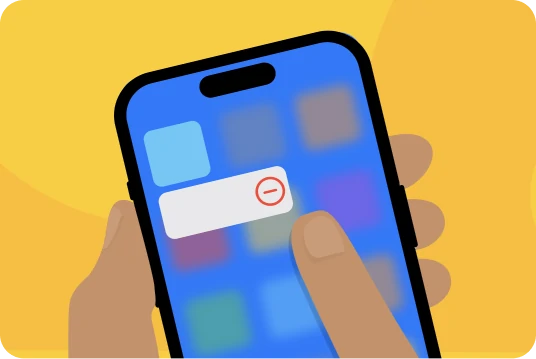
First, you can Limit Ad Tracking by navigating to your phone’s privacy settings and disabling the “Allow Apps to Request to Track” feature. This prevents apps from sharing your “IDFA” (Identifier for Advertisers) with third parties. Second, you should regularly Audit App Permissions. Many apps request microphone or location access despite having no functional need for them; revoking these permissions narrows the data stream.
Additionally, you can Reset your Advertising ID in your system settings. This doesn’t stop ads, but it “clears the slate,” making it harder for algorithms to link your past behavior to your current profile. Finally, switching to privacy-focused browsers that block third-party trackers can significantly reduce the amount of data harvested while you surf the web.
The Verdict: Prediction, Not Eavesdropping
The feeling that your phone is listening is a testament to the staggering efficiency of modern data science. We are much more predictable than we like to believe. Advertisers don’t need to hear you say “hiking boots” when they already know your age, your fitness levels, your recent travel history, and the fact that your best friend just bought a pair.
The “ghost” isn’t in the machine; it’s in the massive trail of data we leave behind every time we unlock our screens. The reality of how ad tracking works is that the industry has become so good at predicting our needs that it no longer needs to eavesdrop on our conversations.