For years, Lorem Ipsum in web design has been treated as a harmless placeholder—something designers drop into layouts just to “get the structure right” before real content arrives. It’s fast, familiar, and seemingly convenient. But what if this long-standing habit is quietly undermining the quality of our designs?
The truth is simple: when we design with meaningless text, we make meaningless decisions. Words are not filler. They are one of the most powerful design tools we have—and ignoring them early comes at a cost.
The Illusion of Progress
Lorem Ipsum creates the illusion that a design is moving forward. Spacing looks balanced, typography feels polished, and everything appears “ready.” But beneath the surface, something critical is missing: intent.
When designers rely on placeholder text, they’re designing for shape instead of meaning. Headlines look fine because they’re the same length. Buttons align neatly because the labels are generic. Sections feel complete because they’re filled—even though no one knows what they actually say.
This illusion becomes dangerous when stakeholders approve layouts that haven’t been tested against real content. The design looks finished, but the experience isn’t real yet. And when actual copy finally arrives, everything breaks: buttons overflow, layouts collapse, hierarchies fail, and compromises begin.
Words Shape Design—Not the Other Way Around
One of the biggest misconceptions in product and web design is that visuals come first, and words come later. In reality, words in visual design define structure, hierarchy, and flow just as much as grids and colors do.
A headline isn’t just text—it determines emphasis.
A CTA isn’t just a button—it defines action.
A paragraph isn’t filler—it sets rhythm and pacing.
When you replace real copy with Lorem Ipsum, you strip the design of its purpose. You’re no longer designing communication; you’re designing decoration.
This is why strong designers don’t ask, “How much text should go here?”
They ask, “What needs to be said here—and why?”
Content-First Design: Designing With Intent
This is where content-first design comes in.
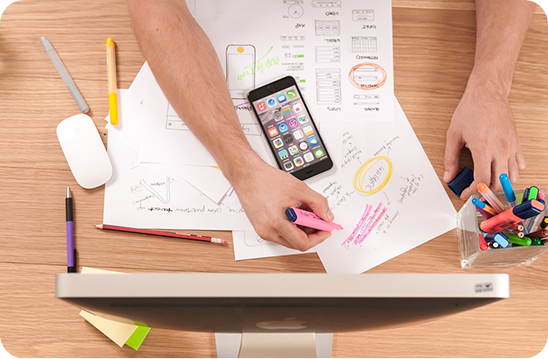
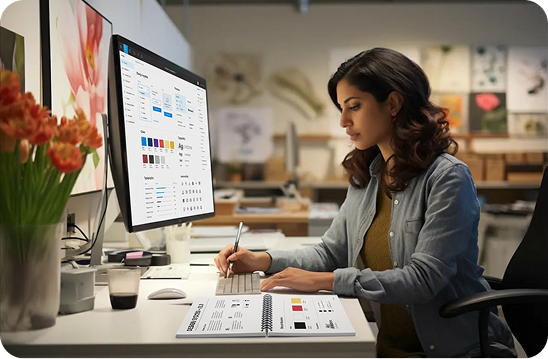
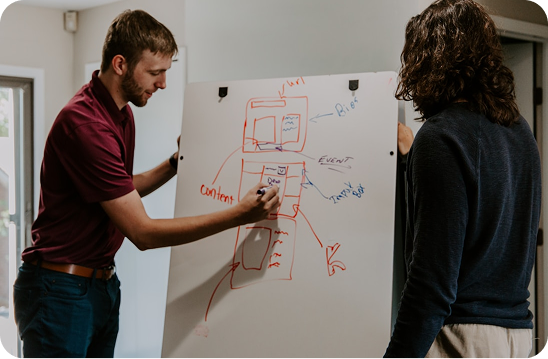
Content-first design flips the traditional workflow. Instead of designing empty containers and waiting for copy to fit, designers collaborate early with writers, product managers, and stakeholders to understand the message before shaping the interface.
When you design with real words:
- Layouts become more honest
- Hierarchy becomes clearer
- User flows make more sense
- Decisions become easier to justify
You stop guessing and start designing with context.
This doesn’t mean the copy has to be final or perfect. Even rough, directional content is infinitely more useful than meaningless Latin text. Real words—even imperfect ones—reveal problems early, when they’re still cheap to fix.
Website Copy vs Placeholder Text: A Critical Difference
The debate between website copy vs placeholder text isn’t about aesthetics—it’s about outcomes.
Placeholder text hides complexity.
Real copy exposes it.
With Lorem Ipsum:
- Designers underestimate space requirements
- Developers build fragile layouts
- UX issues stay invisible until late stages
With real copy:
- Designers see where emphasis is needed
- Developers build flexible, resilient components
- UX problems surface early
Placeholder text makes everything look easier than it really is. Real copy forces teams to confront reality—and that’s exactly what good design should do.
The Impact on UX and Conversion
Users don’t experience your grid system.
They don’t care about your font scale.
They read words.
Clear, intentional copy guides users, builds trust, and reduces friction. When words are treated as an afterthought, UX suffers—even if the interface looks beautiful.
Consider:
- A vague CTA vs a clear, action-driven one
- A generic error message vs a helpful explanation
- A bland headline vs one that sets expectations
These moments define user experience far more than visual polish alone.
By killing Lorem Ipsum early, you force yourself to design for clarity instead of comfort.
Better Collaboration Across Teams
Another hidden cost of Lorem Ipsum in web design is misalignment between teams.
Designers approve layouts that writers can’t realistically fill.
Developers implement components that break with real text.
Content teams feel boxed in by designs that weren’t made for words.
When words are present from the start, collaboration improves naturally. Designers, developers, and content creators speak the same language because they’re reacting to the same reality.
This reduces rework, speeds up iteration, and creates stronger final products.
When (and If) Lorem Ipsum Is Acceptable
To be clear: this isn’t a call to ban Lorem Ipsum entirely. It has limited use cases—very early wireframes, quick layout experiments, or abstract explorations.
But the moment a design moves toward validation, presentation, or development, placeholder text becomes a liability.
If a design is important enough to review, it’s important enough to include real words.
When you design with empathy, psychology, and simplicity, every glance counts — and every user feels right at home.
Designing With Words Is Designing With Empathy
At its core, killing Lorem Ipsum is about respect—respect for users, for content, and for the craft of design.
Words carry meaning. They carry emotion. They carry intent.
When designers treat words as a primary design material—not an afterthought—they create experiences that are clearer, more usable, and more human.
So the next time you open a design file, pause before dropping in Lorem Ipsum. Ask yourself:
What is this interface actually trying to say?
Because when you design with real words, you’re not just designing screens—you’re designing communication. And that’s where great design truly begins.