Challenges and Negative Impacts of AI on the World of Design and User Experience
Artificial Intelligence (AI) has quickly become one of the most talked-about technologies in the design and user experience (UX) industry. From automated layouts to AI-generated prototypes, the tools available today can save designers hours of work and help companies reduce costs. However, this progress comes with a price. While AI can speed up the process, it also introduces many AI in design challenges that affect creativity, uniqueness, and emotional connection with users.
The purpose of design is not only to look good but also to make people feel something, connect with a brand, and enjoy their experience. This is where AI often struggles. In this article, we will explore the negative impacts of AI in UX, the AI limitations in user experience, and the important balance between Human vs AI in user experience. We will also discuss AI creativity limitations and why humans remain at the center of true innovation.
AI in Design Challenges
The role of AI in design is growing every day, but it is far from perfect. Some of the key challenges include:
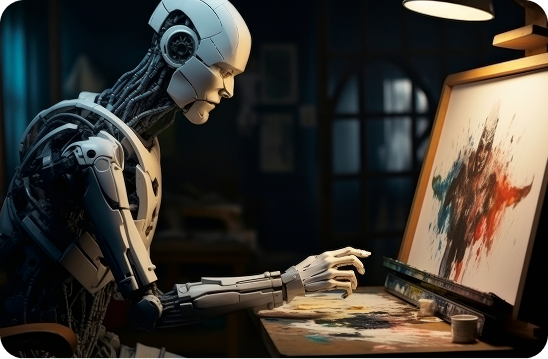
- Lack of true creativity: While AI can generate visuals, icons, or templates, it cannot invent new concepts in the way humans do. Creativity comes from lived experiences, emotions, and imagination, which are outside AI’s reach.
- Data-driven restrictions: AI tools rely on existing data. If something has not been done before, the system may fail to deliver unique results. This creates a limit when businesses want to launch fresh, groundbreaking campaigns.
- Generic outcomes: Because AI is trained on huge amounts of similar data, it often produces results that look alike. Over time, this may cause different brands to use similar styles, losing their unique identity.
These AI in design challenges make it clear that while AI can support designers, it cannot fully take over the role of human creativity.
Negative Impacts of AI in UX
When it comes to user experience, AI is often seen as a tool for personalization and efficiency. However, the negative impacts of AI in UX should not be ignored:
- Robotic interactions: Chatbots, recommendation systems, and AI assistants can sometimes feel cold and emotionless. Users may feel they are speaking to a machine, not a brand that understands them.
- Poor handling of unexpected situations: AI works best when the data matches what it has learned. When users act in ways the system does not recognize, the AI may fail, leaving users frustrated.
- Erosion of trust: A single bad experience with an AI-powered system—such as wrong product suggestions or irrelevant answers—can make users lose confidence in the entire product.
- Bias and fairness issues: If the data used to train the AI is biased, the system can unintentionally discriminate or deliver unfair results, damaging the user experience.
Instead of replacing humans, AI should complement them to avoid these risks.
AI Limitations in User Experience
There are some problems that AI simply cannot solve because they require a deep human touch. The AI limitations in user experience include:
- Weak understanding of context: AI can process information but often misses the cultural, emotional, or social context behind user behavior.
- No empathy: Empathy is at the heart of good UX. AI can analyze data, but it cannot “feel” what a user is going through.
- Accessibility blind spots: AI may fail to recognize the diverse needs of users with disabilities or users from different cultural backgrounds.
- Difficulty with nuance: Humor, sarcasm, and subtle emotional cues are often misunderstood by AI, which can lead to poor user interactions.
These limitations show why human designers must remain in control of user experience strategies.
Human vs AI in User Experience
- The conversation around Human vs AI in user experience is not about one replacing the other—it is about balance.
- Humans bring empathy, creativity, and the ability to understand complex emotions. Designers can see the bigger picture and design experiences that feel authentic.
- AI brings speed, data analysis, and the ability to handle repetitive tasks. It can quickly test ideas, analyze user behavior, and generate prototypes.
- The future lies in collaboration. AI should take care of repetitive and data-heavy tasks, while humans focus on creativity and innovation. This partnership allows companies to save time while still delivering user-centered designs.
AI Creativity Limitations
- One of the biggest AI creativity limitations is its inability to create something truly original. AI systems are trained to recognize patterns and remix existing content. While this can be useful for brainstorming or generating quick drafts, it cannot replace the human spark of imagination.
- True creativity comes from human experiences, cultural understanding, and emotions. For example, a designer might create a campaign inspired by personal memories or social issues—something AI cannot replicate. This is why AI should be seen as a supportive tool rather than the main driver of creativity.
Artificial Intelligence will continue to play a major role in the future of design and UX. However, the AI in design challenges, the negative impacts of AI in UX, and the AI limitations in user experience show us that technology alone is not enough.
The comparison of Human vs AI in user experience highlights a simple truth: AI is powerful, but humans bring meaning. Designers should use AI as a helper—automating repetitive tasks and speeding up processes—while keeping creativity, empathy, and innovation in human hands.
The future of design will belong to those who understand how to use AI wisely without losing the human touch. In this balance, AI becomes a tool for progress, not a threat to originality.