In 2026, AI in UI UX design is no longer experimental. It is practical, integrated, and reshaping how digital products are imagined and built. What started as simple automation tools has evolved into intelligent systems that influence research, prototyping, personalization, and even strategic decisions.
The future of UI UX design is not about replacing designers. It is about expanding what designers can do, faster and more accurately than ever before.
Let’s break down what is really changing, and why it matters.
The Shift From Manual Design to AI Powered UX Design
For years, UI and UX processes followed a predictable path. Research, wireframes, testing, iteration. Still valid, still important. But now, AI powered UX design is accelerating each of those steps.
AI tools can:
- Analyze thousands of user sessions in minutes
- Generate layout variations based on behavior patterns
- Predict friction points before launch
- Personalize interfaces in real time
This does not remove the designer’s role. It removes repetitive work and guesswork.
Instead of spending hours reorganizing layouts, designers can focus on strategy, storytelling, and emotional impact.
AI Is Transforming User Research and Testing
One of the biggest shifts in AI user experience design is how we gather insights.
Traditional research depends on surveys, interviews, and manual analysis. AI systems now analyze behavior data, heatmaps, click streams, and feedback automatically. They detect patterns humans might miss.
For example, AI can identify:
- Drop off points in a checkout flow
- Confusing navigation patterns
- Emotional sentiment in user feedback
- Micro behavior differences between audience segments
This means decisions are less based on assumptions and more grounded in real evidence.
And in competitive markets, that speed matters.
The Rise of Intelligent Personalization
Static interfaces are fading. In 2026, personalization is expected.
AI in UI UX design enables products to adapt in real time. Layouts, content blocks, and recommendations adjust based on user behavior, preferences, and context.
Think about:
- E commerce platforms that rearrange products based on browsing habits
- Learning apps that adapt difficulty levels automatically
- SaaS dashboards that highlight features based on usage patterns
This level of intelligence creates experiences that feel intuitive rather than generic.
Personalization is no longer a bonus. It is becoming a core expectation.
AI Design Tools for UX Are Changing Daily Workflows
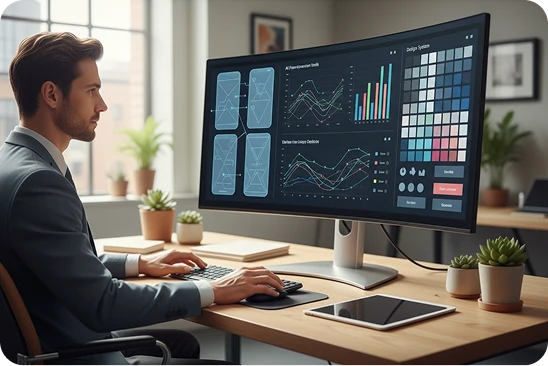
AI design tools for UX have moved beyond image generation. They now assist with:
- Wireframe creation
- UI copy suggestions
- Accessibility checks
- Component variations
- Design system management
Instead of starting from a blank canvas, designers start from structured suggestions.
But here is the key point. AI tools are only as good as the direction they receive. Strong design thinking is still essential. AI accelerates execution. It does not replace judgment.
What We’ve Seen in Real Projects
In real client work, AI has already changed how teams operate.
One project involved redesigning a SaaS onboarding flow. Traditionally, we would test two or three variations. With AI analysis, we generated ten variations based on user behavior clusters. The system predicted which layout would reduce friction for each segment.
Another client wanted higher engagement in their mobile app. Instead of redesigning everything, we used AI behavior insights to adjust content hierarchy. Engagement increased without major structural changes.
We have also seen mistakes.
Some companies rely too heavily on automated design suggestions. They skip strategy. The result feels generic and disconnected from brand identity.
The lesson is simple. AI enhances expertise. It cannot replace it.
Design still requires context, empathy, and business understanding.
UI UX Trends 2026: What’s Emerging
Looking ahead, several clear UI UX trends 2026 are shaping the industry:
1. Adaptive Interfaces
Interfaces that evolve based on behavior and usage history.
2. Predictive UX
Designs that anticipate user needs before actions are taken.
3. Conversational and Voice Driven UI
AI systems integrated directly into the interface as assistants.
4. AI Assisted Accessibility
Automatic contrast adjustments, layout improvements, and readability enhancements.
5. Data Informed Minimalism
Cleaner designs supported by behavioral intelligence, not aesthetic guesswork.
The future of UI UX design will be less about visual trends and more about intelligent interaction.
Why This Shift Matters for Businesses
For companies, AI user experience design is not just a design upgrade. It is a competitive advantage.
Better personalization leads to:
- Higher conversion rates
- Improved retention
- Stronger brand loyalty
- Faster iteration cycles
AI shortens the feedback loop between users and product teams. Instead of waiting months for insights, teams can adjust in near real time.
This reduces risk and increases confidence in design decisions.
Practical Advice for Designers and Teams
If you are working in UI UX today, here is what matters most:
- Learn how AI tools work instead of fearing them
- Strengthen your strategy and research skills
- Focus on human psychology and behavior
- Use AI to validate ideas, not replace thinking
- Keep brand identity central in automated workflows
The designers who succeed in 2026 will not be those who resist AI. They will be those who know how to guide it.
Final Thoughts
AI in UI UX design is not a temporary trend. It is a structural shift in how digital products are created and optimized.
The future of UI UX design belongs to professionals who combine creativity, empathy, and intelligent systems. Technology is evolving quickly. Human insight remains irreplaceable.
In the end, great design has always been about solving real problems for real people. AI simply gives us better tools to do it well.
And the designers who adapt will not just survive this shift. They will lead it.