How Artificial Intelligence Is Empowering Designers
August 26, 2025
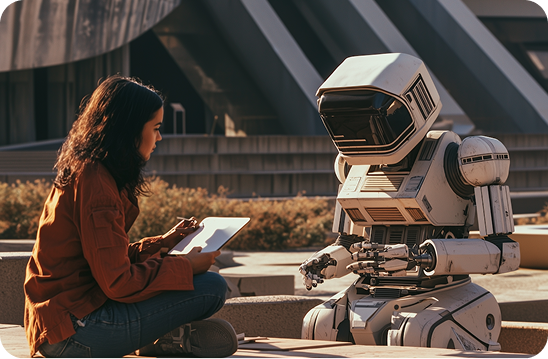
Artificial Intelligence (AI) is changing the way we think about design. What used to take hours of manual effort—like prototyping, testing layouts, or resizing assets—can now be done in seconds. But the real impact of AI in UX/UI design isn’t just speed; it’s about creating smarter, more personalized, and more accessible experiences. Designers today are learning to embrace AI not as a replacement, but as a partner that expands what’s possible.
Benefits of AI in Design
Integrating artificial intelligence (AI) into UX/UI design has lots of benefits, improving both the effectiveness of the design process and the overall user experience. Designers may employ AI to produce interfaces that are not just more responsive and intuitive, but also customized to each user’s specific requirements and preferences.
- Faster workflows – AI cuts out repetitive work like wireframing, prototyping, or resizing visuals, freeing up more time for creative exploration.
- Smarter insights – By analyzing user behavior, AI highlights patterns and suggests improvements that make interfaces easier to use.
- Personalization – Interfaces can now adapt in real time to each person’s habits and preferences, delivering experiences that feel truly tailored.
- Improved accessibility – From generating alt text to recommending larger buttons or voice navigation, AI helps create products that everyone can use.
- Creative freedom – With automation handling the technical tasks, designers can dedicate more time to experimenting and crafting innovative concepts.
How AI Helps Designers
While there is speculation of AI taking over our jobs (and the world), we see plenty of opportunity for designers to embrace this technology in ways that will support their work, not take it away.
Customizing User Experiences
Amazon adapts product displays based on browsing history, while Adobe uses AI to suggest tools depending on how you work. These features streamline processes and improve user satisfaction.
Enhancing Prototyping
Tools like Wix ADI can generate a full website draft in minutes, which users or designers can then refine. This makes testing and iteration much faster.
Automating Tasks
Cropping, resizing, upscaling images, or adjusting colors are tasks AI can easily handle, giving back hours of valuable design time.
Creating New Visual Styles
AI-powered filters and recognition systems can apply effects or themes intelligently, letting designers experiment with fresh visual directions.
Design Better Websites
Machine learning can collect client requirements, match them to market trends, and suggest site structures that balance goals with usability.
Analyze Data to Understand Users
With so much digital activity generating data, AI helps filter the noise and uncover meaningful insights that lead to better design choices.
The Future of AI in UX/UI Design
AI is not replacing designers; it’s empowering them to focus on creativity and innovation. By leveraging AI-driven tools, designers can create more intuitive, accessible, and engaging digital experiences. The key to success lies in blending AI efficiency with human-centered design principles.
- Enable real-time UI adaptation based on user context.
- Advance AI-driven voice and gesture interfaces.
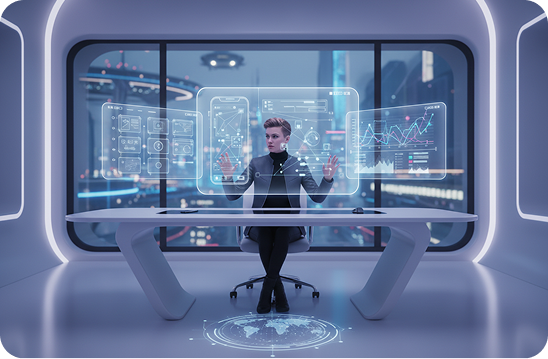
- Enhance neural interface technology, allowing direct brain-computer interaction for UX design.
The challenge will be balancing AI’s efficiency with human-centered design principles. Technology can optimize, but empathy, storytelling, and creativity will always come from people.
AI-Powered Design Tools
The number of AI-driven tools available to designers is growing quickly. Here are some of the most impactful:
- Figma AI assists in generating wireframes, suggesting UI components, and optimizing layouts based on best practices.
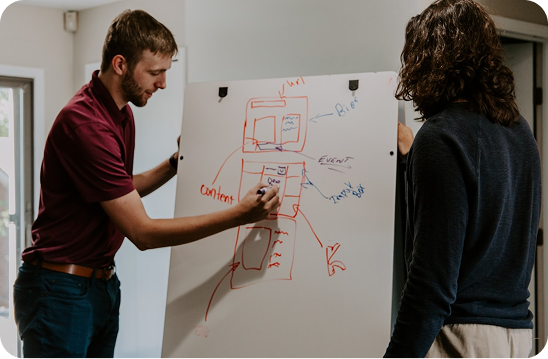
- Uizard turns sketches or text prompts into editable mockups.
- Galileo AI Text-to-UI generator for app and website screens.
- Framer AI generates full websites instantly from prompts.
- Notion AI helps designers write project briefs, documentation, and summaries quickly.
These tools don’t take creativity away—they enhance it, allowing designers to focus more on innovation and less on repetitive work.
Final Thoughts
AI is not the end of design—it’s the beginning of a new chapter. By embracing AI, designers gain speed, precision, and deeper insight, while keeping their creativity and empathy at the core of every project. The future of design won’t be defined by machines alone, but by how humans and AI collaborate to build experiences that are smarter, more inclusive, and more meaningful.