If you have ever looked at a job board or tried to hire for a creative team, you have probably felt the headache. The titles seem endless. You see listings for UI/UX designers, experience architects, and the two heavy hitters that confuse everyone: Product Designers and UX Designers.
Are they the same person? Do they do the same work?
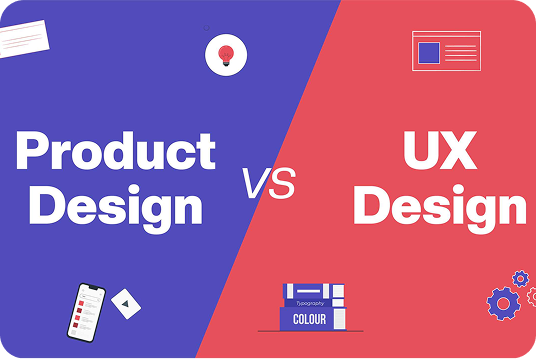
The short answer is no, but the long answer is where things get interesting. Understanding the nuances of Product Designer vs UX Designer is critical whether you are building a startup or looking to specialize your own career. While they share a lot of DNA, their focus and end goals differ in ways that can make or break a project.
Let’s break down exactly what sets them apart.
The Big Picture: Mindset Matters
To understand Product Design vs UX Design, you have to look at the primary motivation of the person doing the work.
Think of it like this. A UX Designer is the user’s advocate. They are fighting for ease of use, accessibility, and the emotional journey of the person pressing the buttons.
A Product Designer does that too, but they are also advocating for the business. They have to ask: Does this feature actually make money? Is it feasible for our engineers to build this in two weeks? Does this align with the company roadmap?
Both roles want a great product. But the Product Designer is often balancing the user’s needs with the business’s reality.
The UX Designer Role: Deep Dive into the Journey
When we talk about the UX Designer role, we are talking about specialists in human behavior.
Their job is to ensure the product is usable, useful, and desirable. They are less concerned with whether the button is the perfect shade of blue and more concerned with whether the user can find the button in the first place.
UX Designer responsibilities typically cover the “why” and the “how” of the interaction. They spend their days:
- ** conducting user research:** Interviews, surveys, and usability testing are their bread and butter.
- Creating personas: figuring out exactly who is using the software.
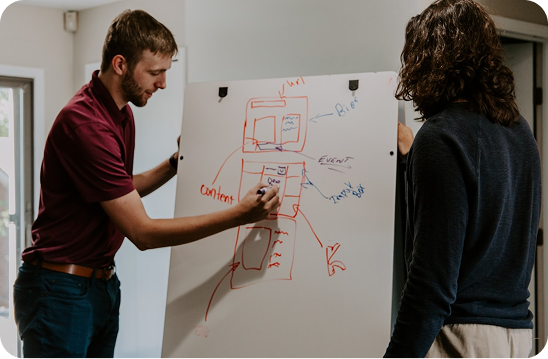
- Building wireframes: laying out the skeletal structure of the interface.
- Mapping user flows: visualizing the path a user takes to solve a problem.
If a user gets frustrated and closes the app, that is a UX problem. The UX Designer is there to smooth out those friction points.
The Product Designer Role: The Strategic Generalist
The Product Designer role is often described as an evolution of UX, but it is really about scope.
A Product Designer is usually involved in the entire product lifecycle. They are there during the initial brainstorming of the business concept, and they are still there after launch, looking at analytics to see how the product is performing.
They use the same tools as a UX designer, like Figma or Sketch. They also do research. However, their decision-making process includes a heavy dose of business strategy.
You will often see Product Designers:
- Prioritizing features based on business value.
- Collaborating closely with product managers and engineers.
- Working on the visual design (UI) alongside the experience.
- Iterating on the product long after the initial launch.
They are guardians of the product’s long-term health, not just the user’s immediate interaction.
What We’ve Seen in Real Projects
I want to take a moment to step away from the textbook definitions and talk about what this actually looks like in the wild.
In my experience working with various tech teams, the line between these two roles is rarely clean. It often comes down to the size of the company.
I worked with a Series A startup a few years back that was desperate to hire a “UX Designer.” They brought in a fantastic researcher who loved deep-diving into user psychology. The problem? The startup didn’t have a product manager yet. They needed someone who could decide what to build, not just how to design it.
The poor UX designer was overwhelmed. They were being asked to make high-level business decisions about feature prioritization that they weren’t trained for.
Conversely, I have seen enterprise companies hire “Product Designers” and then stick them in a silo where they only tweaked button styles. That is a waste of money.
The biggest lesson learned is this: If you are a small team, you probably need a Product Designer. You need that generalist who cares about the business viability. If you are a large organization with established product managers, hiring a dedicated UX Designer allows for that deep, specialized focus on the user journey that generalists sometimes miss.
Don’t just hire a title. Hire for the gap in your current team.
Product Designer vs UX Designer: The Skill Overlap
Despite the differences, the Venn diagram of these two roles has a massive overlap.
If you are a Product Designer, you cannot ignore usability. If you are a UX Designer, you cannot completely ignore business goals.
Both professionals need to master:
- Design Thinking: Empathizing, defining, ideating, prototyping, and testing.
- Prototyping Tools: Figma, Adobe XD, or Axure.
- Collaboration: Neither role works in isolation. Communication is 50% of the job.
The difference is mostly in where they spend the majority of their mental energy. The UX Designer goes deep on the user. The Product Designer goes broad on the product.
Which One Should You Focus On?
If you are looking to hire or choosing a career path, look at the end goal.
Choose the UX Designer role if you love psychology, research, and solving specific interaction puzzles. It is perfect for people who want to be the voice of the customer.
Choose the Product Designer role if you like business strategy, project management, and seeing a product through from a messy idea to a live application. It is suited for people who want to own the whole process.
Final Thoughts
At the end of the day, titles are just labels. We have seen “UX Designers” who run the whole show and “Product Designers” who only do wireframes.
What matters is clarity. Whether you are the one doing the hiring or the one doing the designing, make sure everyone agrees on the responsibilities before the work starts. When the business goals and user needs align, that is where you build something that lasts.