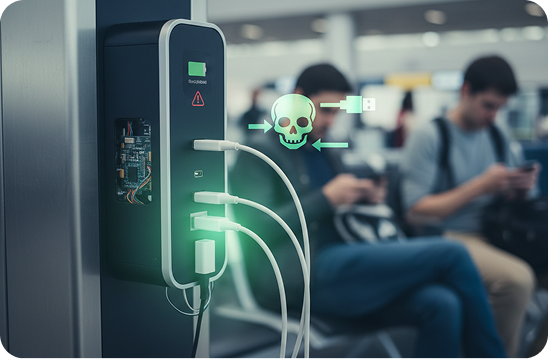
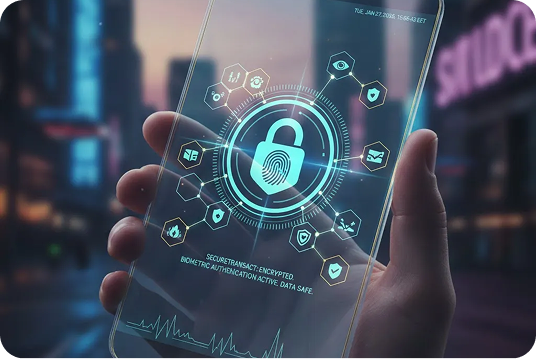
We’ve all been there: you’re at the airport, your phone battery is at 2%, and your boarding pass is digital. You spot a public USB charging station—a literal lifesaver in the moment. You plug in, lean back, and watch the percentage climb. But while your battery is gaining power, your personal data might be draining away.
This phenomenon is known as juice jacking, a security exploit that turns a convenient public utility into a gateway for cybercriminals.
What is Juice Jacking?
To understand a juice jacking attack, you first have to understand how a USB cable works. USB cables aren’t just for power; they are designed for two-way communication. This is why, when you plug your phone into a computer, you can transfer photos or back up your data.
Juice jacking occurs when a criminal modifies a public USB port or the cable attached to it to act as a data transfer tool. While the port provides the electrical current your phone needs, it simultaneously uses the data pins in the connection to install malware or syphon off sensitive information—all without the user’s knowledge.
How a Juice Jacking Attack Works
The primary danger of usb juice jacking is its invisibility. Unlike a shady website or a suspicious email attachment, a compromised charging station looks exactly like a legitimate one.
There are two main ways these attacks are executed:
- Data Theft: As soon as you plug in, the compromised port attempts to “pair” with your device. If successful, the attacker can access your photos, contacts, emails, and even passwords stored in your browser.
- Malware Installation: The attacker uses the connection to drop a juice jacking device—usually a small, hidden microchip behind the faceplate—that installs malicious software. This could include keyloggers that record your banking credentials or “ransomware” that locks you out of your device until a fee is paid.
The FBI and the FCC have both issued warnings regarding these stations, particularly in high-traffic areas like malls, hotels, and transit hubs.
The Hidden Threat: The Juice Jacking Device
You might wonder how an attacker manages to compromise a public kiosk. Often, it involves a physical juice jacking device hidden inside the charging pylon.
These devices are incredibly small and can be installed in seconds by someone posing as a maintenance worker. In some cases, attackers don’t even bother with the wall port; they simply leave a “forgotten” USB cable plugged into the station. When a desperate traveler uses that specific cable, they are plugging directly into the attacker’s hardware.
How to Protect Your Data
The threat of juice jacking doesn’t mean you can never charge your phone on the go. It simply means you need to change how you charge it. Here are the best ways to stay safe:
1. Use an AC Outlet
Whenever possible, avoid the USB port entirely. Carry your own “brick” or wall plug and use a standard electrical AC outlet. These outlets only provide power and have no data-transfer capabilities, making them 100% safe from digital theft.
2. Invest in a “USB data blocker “
If you must use a public USB port, use a USB data blocker. This is a small adapter that sits between your cable and the port. It physically disconnects the data pins in the USB connection while allowing the power pins to stay active. It ensures your phone gets the “juice” without the “jacking.”
3. Carry a Power Bank
The most reliable way to avoid a usb juice jacking scenario is to be your own power source. A portable battery pack allows you to charge your device anywhere without ever having to trust a public port.
4. Use “Charge Only” Mode
Most modern smartphones will ask you if you want to “Trust this computer” or “Share data” when plugged into a new source. If you see this pop up at a charging station, select “No” or “Charge Only” immediately and unplug the device. This is a major red flag that the port is trying to communicate with your operating system.
Conclusion
Public charging stations are a modern convenience, but they come with a hidden price tag. Juice jacking is a reminder that in the digital age, hardware can be just as vulnerable as software. By carrying your own charging equipment or using a data blocker, you can ensure that the only thing your phone picks up at the airport is a full battery.